by Krissy.Venosdale | Jan 26, 2012 | Reflect
This week is National No Name Calling Week. I think every day in the classroom is an opportunity to model kind, caring behavior and to set the expectation for mutual respect. But, in honor of this week, here are a few ideas of ways your class could get the word out:
1.) Tagxedo: Have kids interview each other and write a biography about their classmate. Let them create a Tagexdo about their classmate. This way, they are celebrating the success of a their classmates.
2.) Digital Storytelling: Put students into small groups and ask them to make persuasive public service announcements about using kind words to each other. Each group could have an artist, narrarator, technical director, and script writer. At the end of the week, hold a red carpet premeire and invite another class to watch the videos. Even better, post them online to share with the world.
3.) Celebrate Being You: Give kids a camera and ask them to take five self-portraits. Ask them to write a short poem about themselves that follows the format “I am (name). I enjoy ___. I get angry when ____. My biggest dream is____. I am (name).” They can narrate their photos with their poem and add background music from freeplaymusic.com.
4.) Poster Contest: This poster was made by taking a photo of toothpaste and then layering text over the top in PhotoShop. Students could use programs like Microsoft Paint, Publisher, PowerPoint, or even an online editor like Pixlr to create posters with photos taken around the school.
5.) Pay It Forward: Give a child in your class a note to do something kind for someone else and leave a “Pay It Forward” note. Keep the note going all week. Put tally marks on a poster to let kids see how many kind acts have taken place during the week.
by Krissy.Venosdale | Jan 25, 2012 | Reflect
This weekend on ABC, an inspirational story will premiere in the movie “A Smile As Big As the Moon.” Sunday, January 29, at 9/8C on ABC. If you’re lucky enough to live in Huntsville, Alabama, home of Space Camp you can go see the movie it at the US Space and Rocket Center. In the trailer below, you can hear the teacher say to his students “It’s about overcoming obstacles.”
If you’ve never been to Space Camp, you may not understand the true meaning and power behind these words right away. I believe every kid (and adult!) needs to experience Space Camp and I’ve blogged about it before. Space Camp is about reaching for the highest star, being all that you can be and more, and doing the impossible. I think this is a movie every educator needs to see. So, Sunday night? I’ll be watching this movie and I can’t wait. I can’t wait to see this amazing book and true story in movie form. I can’t wait to see a teacher leading his students in overcoming obstacles. I can’t wait to be inspired.
From Hallmark Hall of Fame’s Site:
Mike Kersjes is the name of a real special-education teacher (and football coach), in Michigan. Mike doesn’t talk down to his “special” students. He respects them, and he believes they’re capable of achieving great things.
Mike hears about Space Camp, a competitive education program at the U.S. Space and Rocket Center. Even though it’s designed for gifted science students, Mike decides participating in the summer program would do wonders for the self-esteem of his young students, one especially who wants to be an astronaut.
He faced incredible obstacles in trying to make his improbable dream become an inspiring reality. At first, school administrators refused to buy in. The folks who ran the camp were less than encouraging; they’d never had a group of special ed kids apply before. Trying to raise the money to pay for the trip was a nightmare. The kids even put on a carwash!
But it was after they were finally given the green light that the real challenge began. How to get kids with Down syndrome, Tourette’s, learning disabilities and emotional problems to leave their baggage behind, to coalesce into a team, and to tackle a bunch of extremely smart students from top schools around the country?
After 9 months of rigorous training preparation the class molded itself into a working team where they turned in a performance so startling, so surprising that it will leave you breathless.
Mike Kersjes had an impossible idea. Yet he made it happen. A truly triumphant story of the power of the human spirit. You won’t want to miss it!
by Krissy.Venosdale | Jan 25, 2012 | Reflect
Dear American Education System,
I’m a student in one of your schools. You see, my brain is wired to learn differently. I am gifted. This doesn’t mean I am wanting privileges or special treatment. It means I want a fair and equal education. I want to grow. I want to know about everything. I don’t just want to read about circuits in a textbook, I want to build circuits and compare them to each other. I show up for class knowing more than 50% of the curriculum I will face on a daily basis, sometimes more. I sit, and wait, a lot. I get offered the chance to help my classmates, to water plants, and to staple papers. But, do I ever get offered the type of curriculum I truly need?
Some people think I’m a trouble maker because I get bored and twirl in my chair. But, I’m twirling because I know the material and to see if I can create enough static electricity to make a spark. I just want something exciting to happen for me in class. Some people expect me to be perfect because of that “gifted” label. But, truthfully, that label is there so that the schools will give me what I need.
Except, they don’t.
I get 2 hours of a gifted program each week. It’s a place where I can explore learning in a deeper way. I think critically and get creative. Those two hours? They sail right by. Then I go back to class where my teacher has 28 other kids that have needs too. She doesn’t have anyone to help her plan things for me. I can’t blame her for not meeting my needs. But, this system that is supposed to meet my needs? It’s not.
I need something different. Mixed grade level classes? Classes that loop? A curriculum heavily based in inquiry and projects where there are no limits for me? I need deeper learning. Every. Single. Day.
If you’re looking for a way to decrease the dropout rate, meet my needs. If you’re looking for a way to increase the presence of Americans in science, math, technology, and engineering careers of the future, meet my needs. If you’re hoping that schools will become a place where ALL kids grow, meet my needs. If you REALLY don’t want any child left behind, would somebody please come back for me?
Sincerely,
A Gifted Learner
by Krissy.Venosdale | Jan 22, 2012 | Reflect
I have fake flowers on my desk. They look real. Many kids come up and smell them, and scrunch their noses when they realize they’ve inhaled some old dusty plastic flower smell. I hope it’s the only fake thing I have in my classroom.
Lately, I’ve noticed something. I talk to kids all day long. I ask them questions. We have conversations. When I’m asking them for a quick video or to take a photo of their learning, something changes. When they write a blog post, something is different. It’s nothing different about the classroom. It’s the audience. Suddenly, there is more meaning behind what they are doing merely because there is an authentic audience. It’s not some fake replica or some pretend reason to do something. It’s real.
So, do we have students do endless amounts of PowerPoints that nobody ever sees? Do they fill out stacks and stacks of paperwork that gets lost under bus seats and recycled after a quick glance through? Do we ask them to create stuff and then it goes home in the backpack, smashed under peanut butter sandwich crumbs? Do we have kids make digital videos that never get posted anywhere where they could be getting global feedback? I have. I know it. Those flowers? They weren’t the only fake thing going on in my class.
Last week, I watched two of my students send a tweet out from our class. They proofread. They checked it. They fixed a grammatical error. Because I asked them to? Nope. Because there was an audience. Because it was real. How do we make it more real on a daily basis? What about……..
- Skype with another class communicating about a shared project.
- Invite members of your community or school in to experience learning from your class. Send out “An Invitation to Learn With Us”
- Hold a “Round Robin Reflection” and let kids tell each other in small groups what they learned.
- Snap a pic of a students work and let them post it to their own blog and reflect on what they have learned about.
- Create a collaborative school blog celebrating writing and publish student stories, poems, and creative projects.
- Ask students to submit book trailers and share them in the school and on the web.
Learning doesn’t come from stickers, A pluses, smiley faces, or even a high five. For learning to be real, the teaching must be real. With a real a purpose. With a purpose that the kids have a part in.
Fake flowers and real learning have one thing in common, they last forever.
by Krissy.Venosdale | Jan 21, 2012 | Reflect
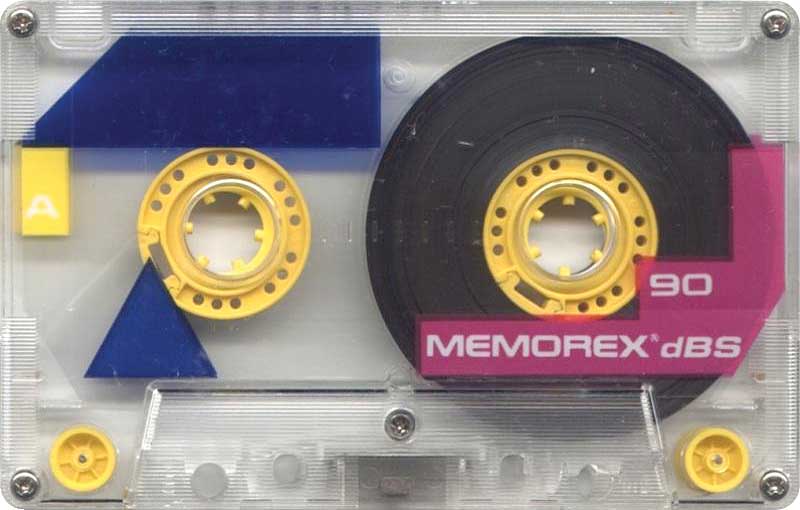 Back in my day…
…a playlist was a carefully recorded tape that took hours of rewinding, resetting, and dubbing in a super-cool dual-cassette player.
…creating on the computer involved making a quarter-fold greeting card, printing, and tearing the edges off the printer paper.
…you held out hopes that you could be the one to press the button on the film strip projector.
…visual excitement in the classroom meant colored chalk or overhead markers.
…the internet wasn’t even really invented yet.
…we had to find our countries on a globe. We couldn’t zoom in on satellite images of their landmarks, neighborhoods, and weather.
…hands-on learning happened once a year… the Science Project.
…our school’s gifted program was just one day a week pull-out at the end of the hall.
…laser discs were the “next big thing” in education.
…our “blogs” were spiral notebooks that nobody ever read but our teacher.
…we wrote reports from encyclopedias and if we were really lucky, there was a photo for the entry.
…we read chapters in textbooks and took tests over tons of facts.
…we studied spelling lists and wrote vocab words with definitions.
…we were asked to regurgitate facts onto worksheets, notebook paper, and long tests.
…interactive online learning was finding trying to avoid dying of dysentery in a game of Oregon Trail.
…our desks were in neat little rows so we could all see and hear our teacher’s lecture.
So much has changed. So much hasn’t. Learning environments have to match the world we live in. Or, learning just won’t work.
Unless, of course, you liked those encyclopedias….

